
Giving homes a better chance to stay dry and durable.
Moisture risk is not only about leaks. Water vapour, air movement, drying potential, climate zone, wall wraps and ventilation all influence how a home performs over time.
For Western Australian homes, the right detail depends on the climate, the wall build-up, product choices and how the home manages both water and air.
Rain control first
Cladding, cavities, flashings and roof details should shed water and allow drainage before moisture reaches sensitive layers.
Drying potential matters
Wall wraps and membranes should be selected with vapour permeance and climate zone in mind, not just habit or availability.
Airtight but ventilated
Airtightness controls uncontrolled leaks; ventilation provides planned fresh air. The two should work together.
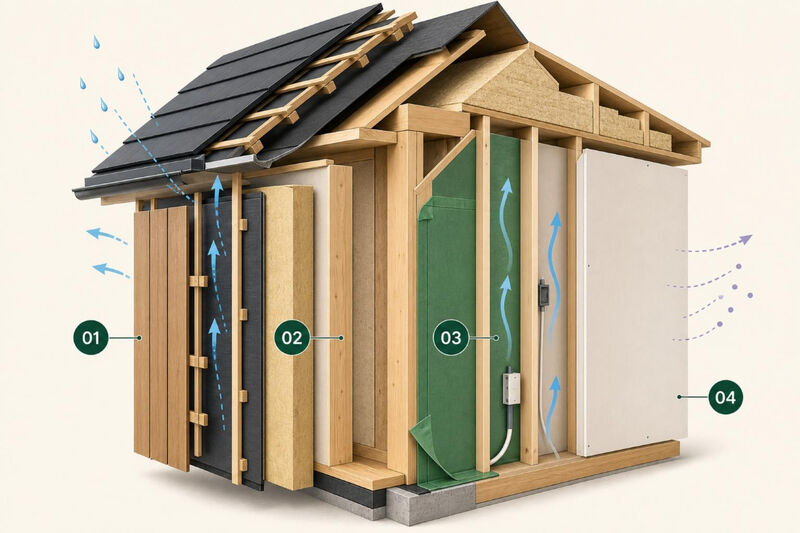
The complete layer system, not one product by itself.
Your home works as a connected set of layers: keep rain out, reduce draughts, hold warmth in, manage everyday moisture and bring in fresh air.
- Keep water out first. A well-detailed roof, cladding and flashing sheds rain and gives any water behind the outside a way to drain — helping protect the structure from leaks and rot.
- Control air movement. Unplanned gaps let draughts in and heated or cooled air out, which can push power bills up. Careful sealing helps, while planned ventilation keeps fresh air flowing.
- Help walls dry out. Walls can get damp from leaks or everyday moisture. The right layers help moisture move out rather than stay trapped, lowering the risk of condensation and mould.
- Ventilate deliberately. A planned flow of fresh air helps clear stale, moist air from inside — supporting a fresher-feeling home and reducing moisture build-up.
Practical answers before you build.
Does moisture-aware mean mould-proof?
No. No building claim should promise mould-proof outcomes. The goal is to reduce risk through better design, detailing and ventilation thinking.
Are foil-backed wraps always wrong?
Not always, but their vapour class and the full wall build-up need to be checked carefully for the climate and application.
Related topics

Thinking about building?
Start with the Home Planning Questionnaire. It helps clarify your site, budget, design stage and goals so we can recommend the right next step.